
The Compendium
The Compendium constitutes the knowledge base of your world. It is an intelligent database that LoneWriter uses to maintain narrative consistency and provide accurate information to The Oracle.
Structure of the Compendium
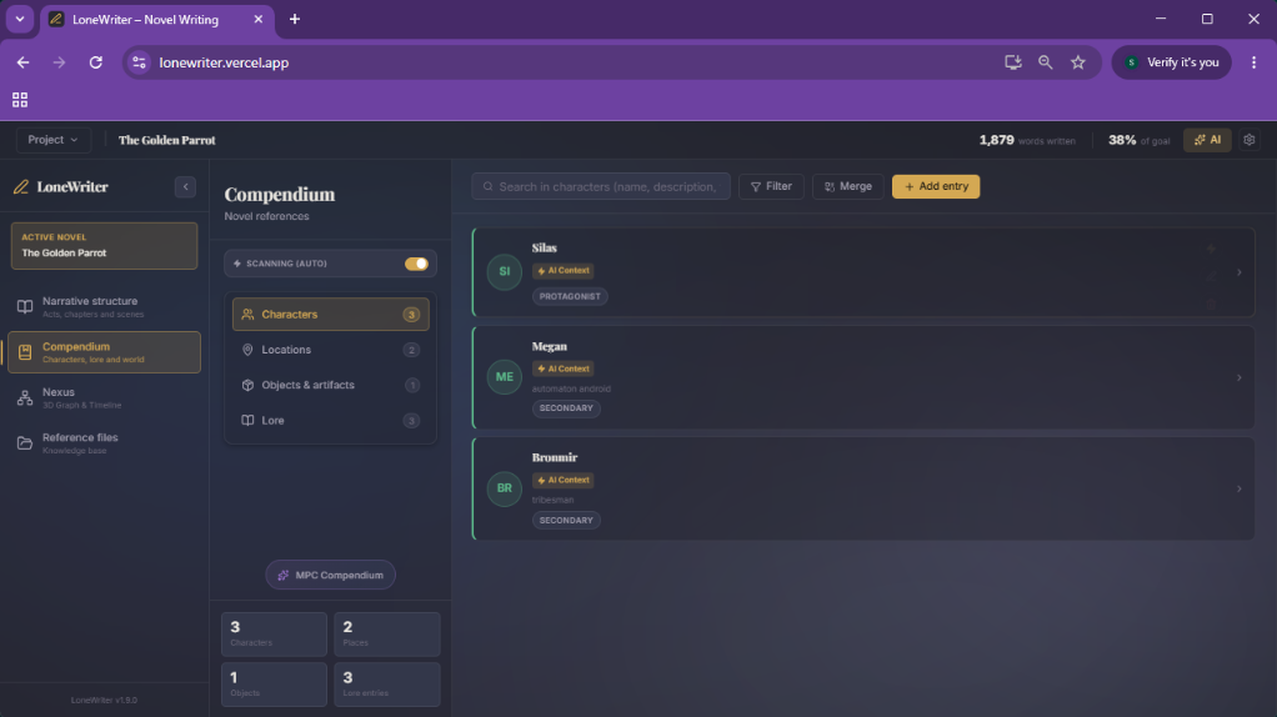
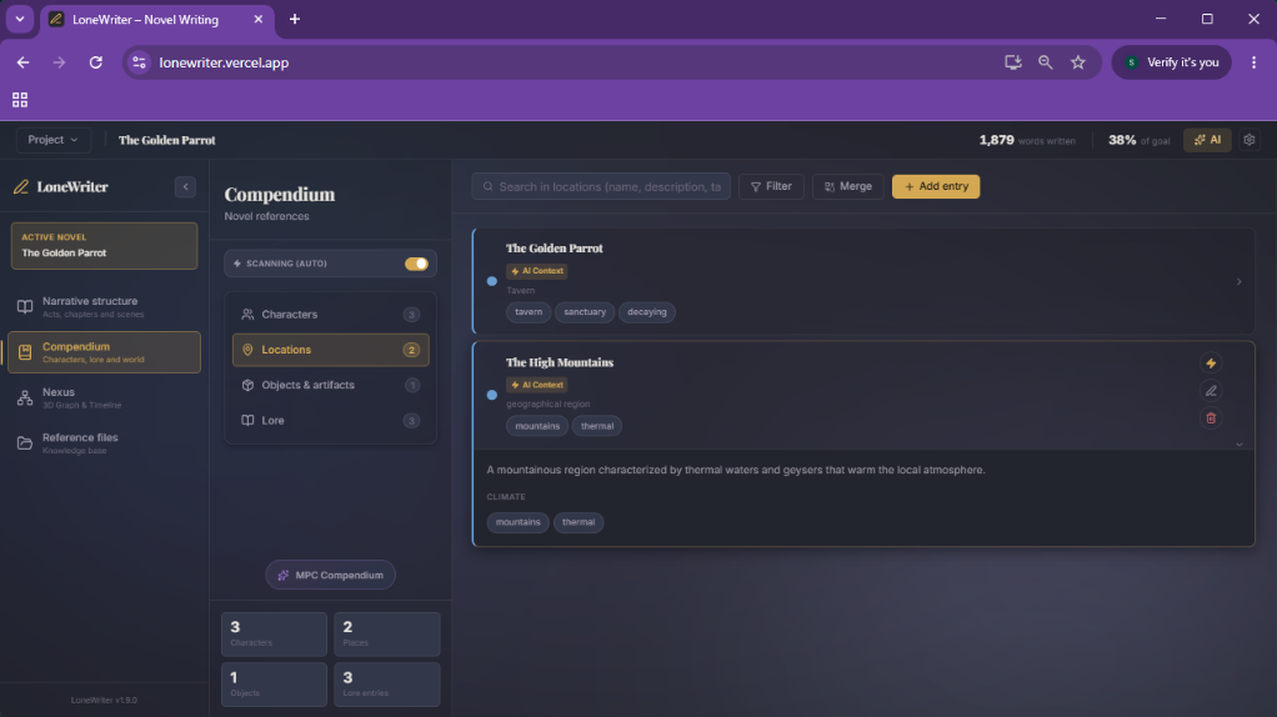
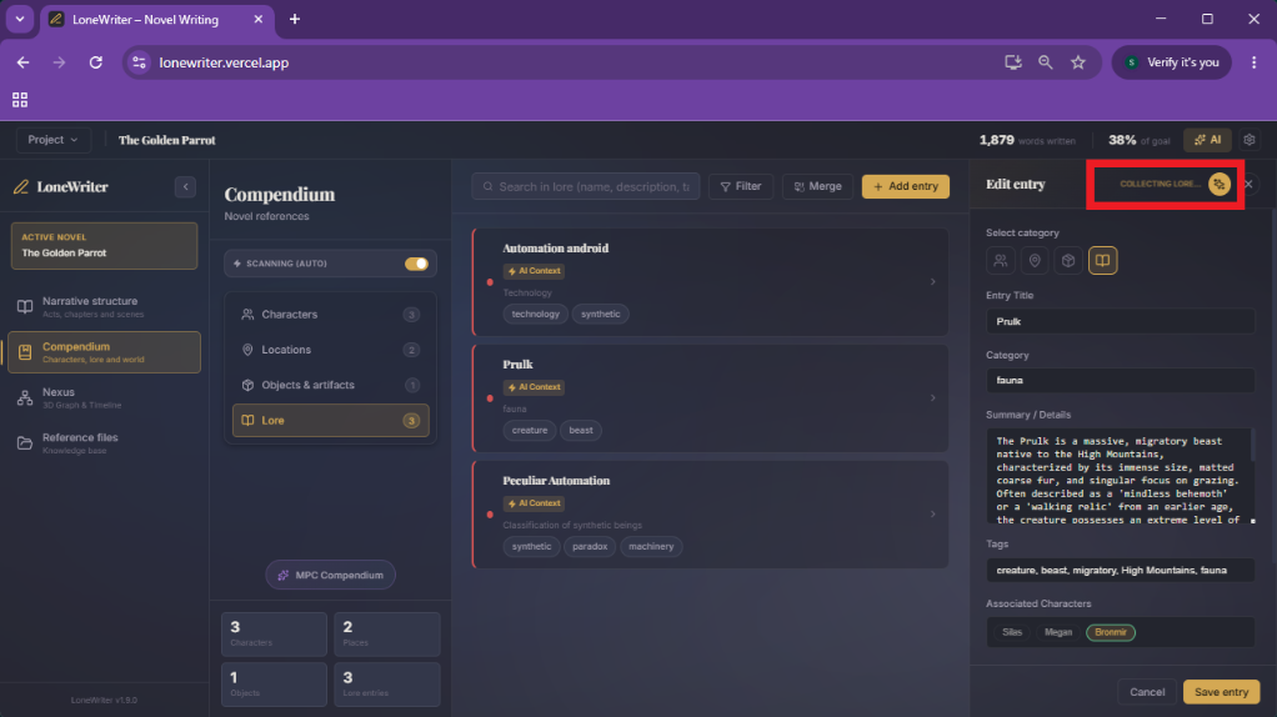
The Compendium organizes information into four main categories:
- Characters: Protagonists, antagonists, and supporting characters.
- Locations: Geographical environments, cities, or specific rooms.
- Objects: Items, technology, or relics relevant to the plot.
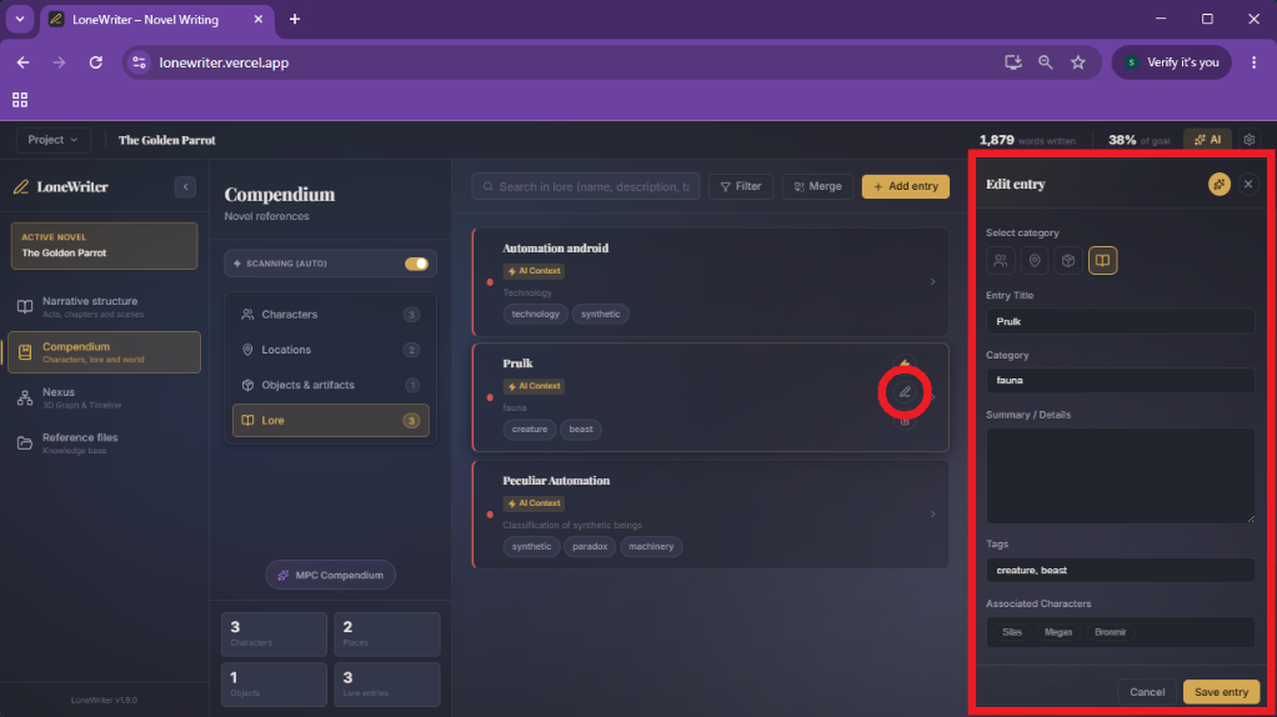
- Lore: Historical facts, magic systems, or cultural concepts.
Advanced Features
AI Context Management
Inside each entity's file, you will find a tag labeled AI Context. This toggle is vital for The Oracle's accuracy:
- Enabled: The AI knows about this entity and its details when answering questions.
- Disabled: The entity is hidden from the AI's "knowledge." This is useful to prevent the model from hallucinating with information about characters who haven't appeared yet or who have died.
Intelligent Autocomplete
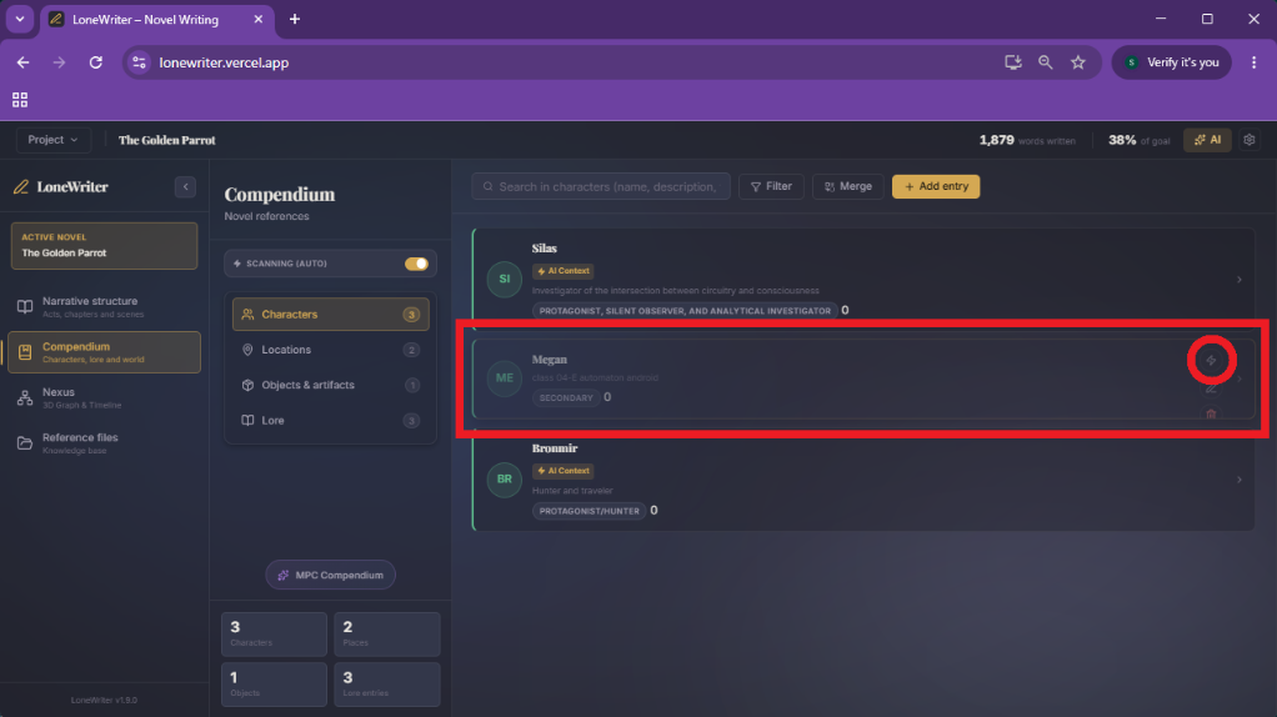
The "Magic Wand" button activates deep scanning. LoneWriter will search your entire draft for mentions of this entity to:
- Generate an automatic summary of its role in the story.
- Identify relevant tags (traits, types).
- Detect relationships with other existing entities.
TIP
Use autocomplete after an intense writing session to ensure your character files always reflect the latest changes in the draft.
Relationships between Entities
For a detailed guide on how to connect characters, places, and objects, please refer to the Relationships and Entities section.
These connections are the engine that powers The Nexus. Every entity and relationship you define here will be automatically projected onto the Knowledge Graph, allowing you to visualize your story's network of connections in 3D and navigate through it intuitively.
Next step
Discover how to automate entry creation with the Proposal Monitor (MPC).